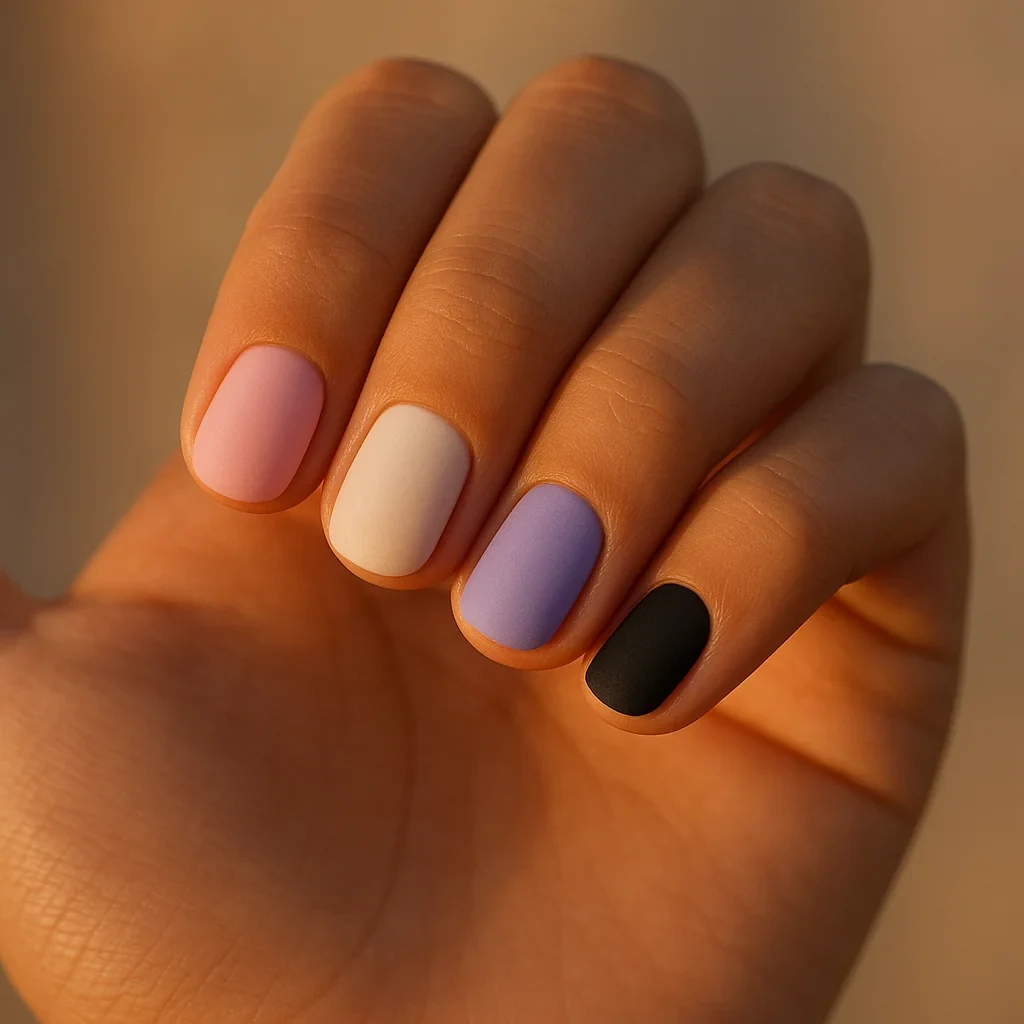
Nail art and queerness have a long, intertwined history. Long before nail salons became mainstream beauty destinations, queer communities — particularly drag culture and LGBTQ+ nightlife spaces — were using nails as a canvas for identity, performance, and statement. Color, length, design: all of it carried meaning in communities where visual self-expression was both art and survival.
Today that relationship has only deepened. Pride Month falls in June, commemorating the Stonewall Riots of June 1969, and every year the nail industry responds with some of its most creative, colorful, and intentional work. But Pride nails aren't only a June phenomenon. The 35 designs below cover the full LGBTQ+ spectrum — rainbow classics, community-specific flag interpretations, minimalist options for quieter moments, and maximalist statements for the parade — organized to help you find exactly what you're looking for, whatever that is.
A quick note on flags: the original rainbow Pride flag was designed in 1978 by artist and activist Gilbert Baker, who was commissioned by Harvey Milk — one of the first openly gay elected officials in the United States — to create a positive symbol for the community. Baker's original eight-color version assigned a meaning to each stripe: red for life, orange for healing, yellow for sunlight, green for nature, turquoise for art, indigo for harmony, and violet for spirit. The six-stripe version most people recognize today emerged for practical manufacturing reasons. Since then, dozens of community-specific flags have been designed, each with its own color logic and history. Many of those flags are represented in the designs below.
Rainbow Pride — The Classic Designs
The rainbow flag remains the most universally recognized symbol of LGBTQ+ pride globally, and its six colors translate naturally to nail art. These designs range from the most literal interpretation — one color per nail — to more technically demanding versions that use the rainbow as raw material for something more complex.
1. Classic Rainbow — One Color Per Nail

The simplest and most direct rainbow Pride manicure: red, orange, yellow, green, blue, violet — one color per nail, in flag order. What looks straightforward is actually a careful color exercise in making six very different hues sit harmoniously on the same hand. Glossy gel finish on short almond nails keeps it clean and modern rather than retro. In direct sunlight the saturated colors read at full intensity, and on deep dark skin the contrast between rich warm tones and the jewel-like polish is genuinely striking.
2. Rainbow Gradient Ombré With Holographic Glitter

Where the one-color-per-nail approach treats each nail as a separate stripe, the gradient version treats all five nails as a single canvas: the rainbow runs continuously from red on the thumb to violet on the pinky, blending through all six colors in a seamless horizontal ombré. A holographic glitter top coat adds a prismatic dimension — in certain light the nails appear to contain the entire visible spectrum simultaneously. This is one of the more technically demanding rainbow designs, and the result justifies the effort.
3. Oil-Spill Holographic Rainbow

Oil-spill nails take a different approach to the rainbow entirely. Rather than stripes or gradients, a specialized chrome powder creates an iridescent surface that shifts through the entire spectrum as the hand moves — the way sunlight catches a film of oil on water. The rainbow here is implicit rather than literal: it's contained within the finish itself, emerging differently in every lighting condition. On deep dark skin against a black background under a single spotlight, the prismatic effect is at its most dramatic. This is Pride nail art as abstract expression rather than flag representation.
4. Rainbow French Tips

The French tip format is one of the most elegant ways to incorporate Pride colors into a manicure that still reads as polished in professional or formal contexts. A sheer nude base with each tip painted in a different rainbow stripe — the arc clean and precise — keeps the design structured and refined. On pale porcelain skin against clear glass, the delicacy of the color at each tip is the whole point: this isn't a shout, it's a considered statement. TsukiNails calls this kind of approach "quiet Pride" — visible to those paying attention, unremarkable to those who aren't.
5. Rainbow Holographic Glitter

Chunky holographic rainbow glitter over clear gel is the most festive interpretation of the rainbow in nail form — the kind of manicure made specifically for parades, festivals, and any occasion where you want to be visible from across the street. On deep rich dark skin against black velvet with dramatic side lighting, each glitter particle catches the light independently and the hand becomes a moving light source. The effect in motion — catching sunlight on a parade route, for instance — is something photographs can only approximate.
6. Pastel Rainbow — Soft and Wearable

Not every rainbow nail needs to be at full saturation. Pastel versions — blush pink, soft peach, butter yellow, mint, periwinkle, soft lavender — use the structure of the rainbow while bringing the volume down significantly. The milky glazed finish adds a soft iridescence that connects them visually as a set. On deep warm dark skin the pastel palette creates an unexpected contrast: the lightness of the colors against the richness of the skin tone is quieter and more considered than the standard saturated version, and just as intentional.
7. Rainbow Micro Polka Dots

The polka dot revival of 2026 — with search interest up over 2,000% year-on-year — translates naturally into a Pride format. Tiny micro-dots in all six rainbow colors scattered asymmetrically across a white base creates a look that's simultaneously part of a mainstream trend and unmistakably Pride. The scattering is intentional: no two nails match, the dots overlap and cluster in some areas and breathe in others. On warm tan skin in bright natural daylight it looks cheerful and modern — a summer manicure that happens to be wearing its identity on its sleeve.
8. Rainbow Jelly Nails

Jelly nails — the thick, translucent, candy-like gel finish that's been one of 2026's defining nail trends — become something genuinely special in rainbow format. Each nail in a different translucent rainbow color: the gel glows from within rather than sitting on the surface, creating a jewel-like effect that's different from any other rainbow nail interpretation. Photographed from directly above on white tiles, the transparency of each color reads clearly. The overall effect is less flag, more prism — and arguably more beautiful for it.
9. Rainbow Aura Nails With White Halo

Aura nails use a freehand blending technique to create soft, atmospheric color gradients rather than sharp edges. In rainbow format, the six colors blend into each other in soft clouds across all five nails, with a thin white outline traced around each nail's perimeter acting as a halo. The result sits somewhere between tie-dye and watercolor, completely unlike any other rainbow nail technique. On medium brown skin with soft studio lighting, the dreamy quality of the blended colors feels genuinely artistic — this is nail art that references painting more than flag design.
10. Rainbow Constellation Nails

A black base with hand-painted rainbow-colored stars and constellation line work turns the night sky into a Pride canvas. Each star is painted in a different rainbow color; the connecting lines trace actual constellation patterns. The ring finger carries a small crystal gem accent. On deep rich dark skin against a dark background with dramatic editorial lighting, the colored stars appear to float — the black base creates depth that makes the rainbow elements read as genuinely luminous rather than simply colored. This is one of the most labor-intensive designs in this collection and one of the most rewarding.
Transgender Pride
The Transgender Pride flag — light blue, pink, and white — was designed by trans activist Monica Helms in 1999. The blue represents boys, the pink represents girls, and the white represents those transitioning, those with a non-binary identity, and those intersex. The flag's symmetry is deliberate: it reads the same regardless of which way it's flying.
11. Trans Flag Colors — Clean and Modern

Each nail a different stripe from the transgender flag — light blue, pink, white, pink, light blue — in soft matte pastel finish on short square nails. The palette is inherently gentle and the matte finish emphasizes that gentleness: these aren't aggressive colors, they're affirming ones. On pale cool-toned skin against white fabric in airy daylight, the composition has a soft, intentional quality. The design is simple enough to attempt at home with three colors of gel polish; the elegance comes from precision rather than complexity.
12. Trans Flag Glazed Donut — Pearl and Iridescence

Taking the trans flag colors into a glazed donut finish — the iridescent pearl glaze that's one of 2026's dominant nail techniques — creates something that feels both on-trend and deeply personal. Alternating baby blue and pink nails with a center white pearl nail, all in the characteristic shifting iridescence of the glazed donut finish. The pearl top coat makes each color appear to glow from within, which suits the flag's color story: soft, luminous, affirming. On pale skin against white ceramic in diffused window light, the whole composition is ethereal.
13. Trans Flag Soft Ombré

A horizontal gradient blending baby blue, soft pink, and white in soft waves across all five nails takes the trans flag from stripes to atmosphere. The matte pastel finish keeps it tender rather than bold — this is the most understated of the three trans flag designs, and arguably the most wearable for everyday life. On pale fair skin against a soft white surface in diffused studio lighting, the three colors transition so gently that the design reads almost as a cloud formation. A manicure that carries meaning without announcing it.
Bisexual Pride
The Bisexual Pride flag was designed by Michael Page in 1998. Its three stripes — deep pink/magenta, lavender/purple, and royal blue — represent same-gender attraction (pink), opposite-gender attraction (blue), and attraction to both (the purple overlap). The flag's relative obscurity compared to the rainbow flag was part of Page's motivation: he wanted bisexual people to have their own specific visual identity.
14. Bisexual Flag Bold Color Blocks

Deep magenta, lavender, and royal blue as bold color blocks on short almond nails — the bisexual flag interpreted with full saturation and a glossy gel finish. The three colors are distinct enough that the flag is recognizable to anyone familiar with it, and beautiful enough to work as a color story independent of context. On warm light brown skin with a loosely closed fist in warm indoor lighting, the jewel-toned palette looks rich and sophisticated. The purple middle nail is the design's anchor: it connects the warm pink and cool blue on either side.
15. Bisexual Flag Deep Ombré

Where the color block version separates the bisexual flag's colors, the ombré version blends them: deep magenta fading through purple to royal blue across each individual nail. The gradient happens within each nail rather than across all five, which means every nail contains the complete flag transition. On medium dark warm brown skin against deep purple velvet, the color intensities complement each other in a way that feels editorial. Glossy gel finish makes the gradient read clearly at every scale, from across a room to up close.
Lesbian Pride
The modern Lesbian Pride flag — designed around 2018–2019 as an update to earlier versions — uses a range of oranges, pinks, white, and deep rose. The design has gone through several iterations reflecting ongoing community conversations about representation, and the current version with its warm sunset palette is one of the most widely recognized community-specific flags.
16. Lesbian Flag Colors — Solid Stripes

The lesbian flag's warm sunset palette — moving from deep orange through lighter orange, soft pink, white, and deep rose — translates beautifully to a one-nail-per-stripe-color format. The warmth of the palette is unusual among Pride flags, which tend toward cooler tones; it looks genuinely striking on medium olive skin in natural daylight. Semi-gloss finish keeps it between matte and mirror, which suits the flag's warm, analog quality. On linen fabric the composition has a natural, organic warmth that feels consistent with the color story.
17. Lesbian Flag French Tips

The lesbian flag's tonal range — from deep orange through pink to white — works particularly well as a tiered French tip format: multiple thin parallel stripes in the flag colors stacked at the nail tip on a nude base. The warm tones of the flag against deep dark skin in warm window light create a rich, sunset-like effect. Coffin nails give the French tip format enough surface area for the tiered stripes to be clearly readable. This is the kind of design that works equally well at a Pride event and at dinner — the structure of the French tip keeps it feeling polished.
Pansexual Pride
The Pansexual Pride flag — hot pink, yellow, and cyan blue — is one of the more graphically bold community flags. The pink represents attraction to women, the blue represents attraction to men, and the yellow represents attraction to non-binary, genderqueer, and other gender-nonconforming people. The three colors are high-contrast and eye-catching by design.
18. Pansexual Flag Bold Color Blocks

Hot pink, yellow, and cyan blue alternating across five nails in glossy gel — the pansexual flag at its most direct and confident. The three colors are high-contrast almost by necessity: they need to read as distinct from each other to communicate the flag's meaning. On deep espresso dark skin in overhead sunlight, the contrast between the neon-adjacent colors and the richness of the skin is at its most vivid. Fingers spread wide against a white background maximizes the visual impact. This is not a subtle design, and it doesn't want to be.
19. Pansexual Flag Chrome Tips

Translating the pansexual flag into chrome French tips — sheer nude base with metallic hot pink, yellow, and cyan tips alternating across the nails — brings the flag colors into the realm of a trendy 2026 manicure format without losing their identity. The chrome finish makes each color shift slightly as the hand moves, adding a dynamic quality to what would otherwise be static color blocks. On warm medium brown skin under beauty editorial lighting, the metallic tips catch light in different ways simultaneously, which makes the hand genuinely interesting to watch in motion.
Non-Binary Pride
The Non-Binary Pride flag was created by Kye Rowan in 2014. Its four stripes — yellow, white, purple, and black — each carry meaning: yellow for gender outside the binary, white for all genders, purple for mixed or fluid genders, and black for agender identity. The flag specifically represents those whose gender identity doesn't fit within the male/female binary.
20. Non-Binary Flag Minimalist Geometric

The non-binary flag's four colors — yellow, white, purple, and black — are interpreted here as a minimalist geometric design rather than literal stripes: yellow base with thin white and purple accent lines on a matte finish. The restraint suits the flag's more understated visual identity compared to the rainbow or bi flag. On light medium fair skin against dark slate with moody directional lighting, the yellow base reads as warm and grounded while the accent lines read as precise and intentional. Matte finish ties the four colors together without letting any one of them dominate.
21. Non-Binary Flag Glitter Gradient

The non-binary flag's four colors as a glitter gradient across all five nails — yellow holographic fading to white, to purple, to black — creates a set that's maximalist in technique while remaining true to the flag's specific palette. Holding a small yellow and purple wildflower bouquet in outdoor light adds a natural, organic element that complements the flag's "yellow for gender outside the binary" meaning without stating it explicitly. The holographic finish ensures the gradient reads differently in every lighting condition.
Asexual Pride
The Asexual Pride flag was created in 2010 by AVEN (Asexual Visibility and Education Network). Its four stripes — black, grey, white, and purple — represent asexuality (black), the grey area between sexual and asexual (grey), non-asexual partners and allies (white), and community (purple). The flag's relatively muted palette reflects the asexual spectrum's position at a distance from the hypersexualized imagery often associated with mainstream Pride aesthetics.
22. Asexual Flag — Tonal Gradient

Black to grey to white to purple as a graduated tonal design — moving from dark at the base to purple at the tips — creates one of the more refined flag nail interpretations in this collection. The palette is inherently sophisticated: the near-monochrome of black, grey, and white functions almost as a neutral base, and the deep purple tip acts as the deliberate color accent. On warm medium brown skin against grey marble in cool studio light, the whole composition is quiet and considered. This is the nail design for people who find most Pride nails too loud but still want to wear their identity with intention.
Genderfluid Pride
The Genderfluid Pride flag was designed by JJ Poole in 2012. Its five stripes — pink, white, purple, black, and blue — represent femininity, all genders, both masculinity and femininity, a lack of gender, and masculinity respectively. The flag represents people whose gender identity changes over time or shifts between different identities.
23. Genderfluid Flag — Five Accent Nails

Each nail a different color from the genderfluid flag — pink, white, purple, black, blue — in matte pastel finish creates a set that's cohesive without being uniform, which is entirely appropriate for a flag representing identity that shifts. On warm medium tan skin in golden hour light, the mix of warm and cool tones within the palette catches the light differently across the hand, creating a subtle visual dynamism. The matte finish unifies the five distinct colors tonally, making them read as a considered set rather than five random choices.
Progress Pride
The Progress Pride flag, designed by Daniel Quasar in 2018, adds a chevron of white, pink, and light blue stripes (representing transgender people) and brown and black stripes (representing LGBTQ+ people of color) to the traditional rainbow design. It's been one of the most widely adopted updated versions of the Pride flag, representing an explicit commitment to intersectionality within the broader community.
24. Progress Pride — Rainbow Plus Chevron

Incorporating the Progress Pride flag's additional elements into nail art requires a design decision: the standard rainbow on most nails, with the white-pink-blue chevron represented on accent nails. The result acknowledges the flag's expanded meaning — the deliberate inclusion of trans and BIPOC identities within the broader rainbow — without requiring the nail art to accurately reproduce a complex flag design. On warm tan skin in bright natural light, the rainbow base nails and the accent nails create a contrast that signals the flag's two-part visual structure.
Intersex Pride
The Intersex Pride flag was created by Morgan Carpenter of Intersex Human Rights Australia in 2013. Yellow and purple were chosen specifically because they are not associated with the gender binary (pink/blue). The circular symbol represents wholeness, completeness, and the right of intersex people to make their own decisions about their bodies.
25. Intersex Flag — Yellow With Purple Circle

Yellow base across all nails with a hand-painted deep purple circle on the accent nail — the intersex flag's signature symbol rendered in miniature. The circular motif requires a steady hand or a nail art liner brush, but the result is a design that is immediately recognizable to those who know the flag and simply elegant to those who don't. Holding a small yellow flower in natural daylight connects the flag's deliberate choice of yellow — specifically chosen to sit outside the pink/blue gender binary — with a natural context. The gold ring detail echoes the circular motif of the flag itself.
Aromantic Pride
The Aromantic Pride flag uses dark green, light green, white, grey, and black. The greens represent the aromantic spectrum, white represents platonic and aesthetic attraction, and grey and black represent the sexuality spectrum. The flag represents people who experience little or no romantic attraction.
26. Aromantic Flag — Clean Stripe Design

Five nails, five colors — dark green, light green, white, grey, black — one per nail, in flag order. The aromantic flag's palette is one of the most distinctive among community flags: the dual greens are unusual in nail art contexts, and the grey-to-black transition gives the set a sophisticated, graphic quality. Resting on a textured plant leaf in natural light creates a composition where the greens of the flag rhyme with the organic green below — a visual connection between the flag's color symbolism and the natural world that feels both intentional and gentle.
Genderqueer Pride
The Genderqueer Pride flag was designed by Marilyn Roxie in 2011. Its three stripes — lavender (a mix of blue and pink, representing androgyny), white (representing agender identity), and dark chartreuse green (the inverse of lavender on the color wheel, representing identities outside the binary) — are based on deliberate color theory decisions. The flag represents genderqueer, non-binary, and other gender-variant people.
27. Genderqueer Flag — Lavender White and Chartreuse

Lavender, white shimmer, and dark chartreuse green across short coffin nails — the genderqueer flag's three-color palette in mixed finish (matte lavender and chartreuse, gloss shimmer on the white nail). The chartreuse green is the most unusual element: it's specifically the color-wheel inverse of lavender, a deliberate design decision by Marilyn Roxie when she created the flag. On pale fair cool skin photographed from a low angle with dramatic editorial lighting, the unusual color combination reads as genuinely distinctive — this is one of the most visually interesting flag palettes in the community, and it translates directly to nail art.
Demisexual Pride
The Demisexual Pride flag shares structural elements with the asexual flag — black, white, grey, and purple — but arranged differently. Demisexuality refers to experiencing sexual attraction only after forming a deep emotional bond with someone. The flag's color story connects demisexuality to the broader asexual spectrum while distinguishing it with its own design.
28. Demisexual Flag — Minimalist With Gem Accent

White base with grey and black diagonal accent stripes on most nails, and a single deep purple gemstone on the ring finger — the demisexual flag's palette expressed through the minimal bejeweled trend that's been one of 2026's most sophisticated nail directions. The diagonal stripes reference the flag's structural design without literally replicating it. On fair freckled skin against grey stone in natural overcast light, the near-monochrome palette reads as quietly refined. The purple gem is the only overt color detail — which feels exactly right for a flag that represents attraction emerging slowly rather than immediately.
Agender Pride
The Agender Pride flag uses black, white, grey, and green stripes to represent an absence of gender. Black and white represent an absence of gender; grey represents semi-genderlessness; and green represents non-binary genders (green being outside the pink/blue binary, as with the intersex flag's deliberate color choice).
29. Agender Flag — Black White Grey and Lime

Black and white striped base nails with a striking lime green accent nail — the agender flag's palette expressed through the contrast between its near-monochrome majority and its single vivid color. The lime green accent nail is jarring in the most effective way: against the black and white stripes it reads as a deliberate disruption, which is precisely what a flag representing the absence of gender identity does when placed in a world structured around it. On medium olive skin against black marble in cool crisp studio light, the composition is graphic and precise.
Polyamorous Pride
The Polyamorous Pride flag uses blue, red, and black with a pi symbol. Blue represents openness and honesty with all partners; red represents love and passion; black represents solidarity with those who must keep their relationships secret due to social stigma. The pi symbol references pi as an infinite, non-repeating number — representing the infinite love possible in polyamorous relationships.
30. Polyamorous Flag With Pi Symbol Accent

Blue, red, and black as color blocks across most nails, with a hand-painted pi symbol on the accent nail — the polyamorous flag's most distinctive element rendered in miniature nail art. The pi symbol requires either a very steady hand or a nail art liner, but at this scale it reads clearly and adds a conceptual layer to what would otherwise be a three-color manicure. On warm olive tan skin against velvet in editorial warm lighting, the three colors sit as richly as any jewelry. The symbolism is there for those who recognize it; for everyone else it's simply a bold, graphic design.
Maximalist and Special Occasion Designs
The designs below are built for parades, festivals, Pride events, and any occasion where maximum expression is the brief. They require more time, more skill, and more commitment — and they deliver proportionally.
31. 3D Rainbow Floral

Sculptured 3D gel flowers, each in a different rainbow color, raised off a white base — nail art that's literally three-dimensional and uses the rainbow as a botanical motif rather than a geometric one. This requires significant technical skill from a nail artist and at least an hour and a half in the salon, but the result sits at the intersection of two of 2026's strongest nail directions: the 3D floral trend and the Pride color story. On warm medium brown skin against white in soft beauty lighting, the flowers appear to bloom off the nail surface.
32. Rainbow Negative Space

Clear gel base with each nail featuring a different rainbow-colored geometric triangle or arc — the negative space approach to Pride nail art treats the bare nail as a canvas element rather than a background to cover. Each cutout shape exposes the natural nail through a frame of rainbow-colored gel, creating designs that read as abstract art at a distance and reveal their geometric precision up close. On medium fair light skin with fingers pointing downward against a white background, the composition is clean and graphic — modern nail art that happens to be wearing the rainbow.
33. Subtle Rainbow Heart

A nude gloss base with a tiny hand-painted rainbow heart on each nail — the most minimal Pride nail design in this collection and, in some ways, the most universally wearable. The hearts are small enough to read as a sweet personal detail rather than a statement, which makes this the right choice for workplaces or contexts where subtlety is appropriate. TsukiNails describes this kind of design as "quiet Pride — visible to those paying attention, unremarkable to those who aren't." The micro heart requires a fine liner brush but is achievable at home with patience.
34. Rainbow Sunset Gradient — Rooftop Golden Hour

Warm vivid ombre blending coral pink, orange, and yellow — the warm half of the rainbow, the sunset spectrum — on deep dark espresso skin in golden hour light on a rooftop, with blurred city lights behind. This is the most lifestyle-oriented composition in the collection: nail photography that exists within a moment rather than in a studio. The warm colors of the gradient amplify the golden light of the hour, and the city in the background gives the image a context that feels like Pride season: summer, warm evenings, visibility, joy. Sometimes the right Pride nail is less about flag accuracy and more about feeling.
35. Trans Flag Progress Nails — The Full Spectrum

Chrome rainbow nails — mirror-finish polish shifting through the entire spectrum from red through violet as the hand moves — are the most technically demanding and visually spectacular design in this collection. The chrome effect requires powder application over gel and careful buffing for the mirror finish, and the rainbow version requires multiple chrome pigments blended at the application stage. On deep black skin in dramatic spotlight lighting, with the hand held as a loose fist, the result is genuinely spectacular: a hand that functions as a prism. For the parade, for the party, for any moment when everything else falls away and what remains is color, movement, and light.
On wearing community flags: If you're planning to wear a community-specific flag design — bisexual, trans, non-binary, or others — as an ally rather than a community member, consider pairing it with the classic rainbow for context. Many people will recognize the rainbow immediately; community-specific flags carry meaning that's more personal. Wearing them respectfully means understanding what they represent. The designs in this article include a brief history of each flag for exactly that reason.